
How Infrastructure Projects Quietly Double Property Values
With the federal government committing ₦3.23 trillion to road networks in 2026 and projects like the Lagos-Calabar Coastal Highway driving land values up by up to 40%, transport infrastructure remains the single biggest catalyst for real estate appreciation in Nigeria. Learn how to identify emerging growth corridors early and de-risk your investment before prices skyrocket.
Rurblist team
3 Minutes read
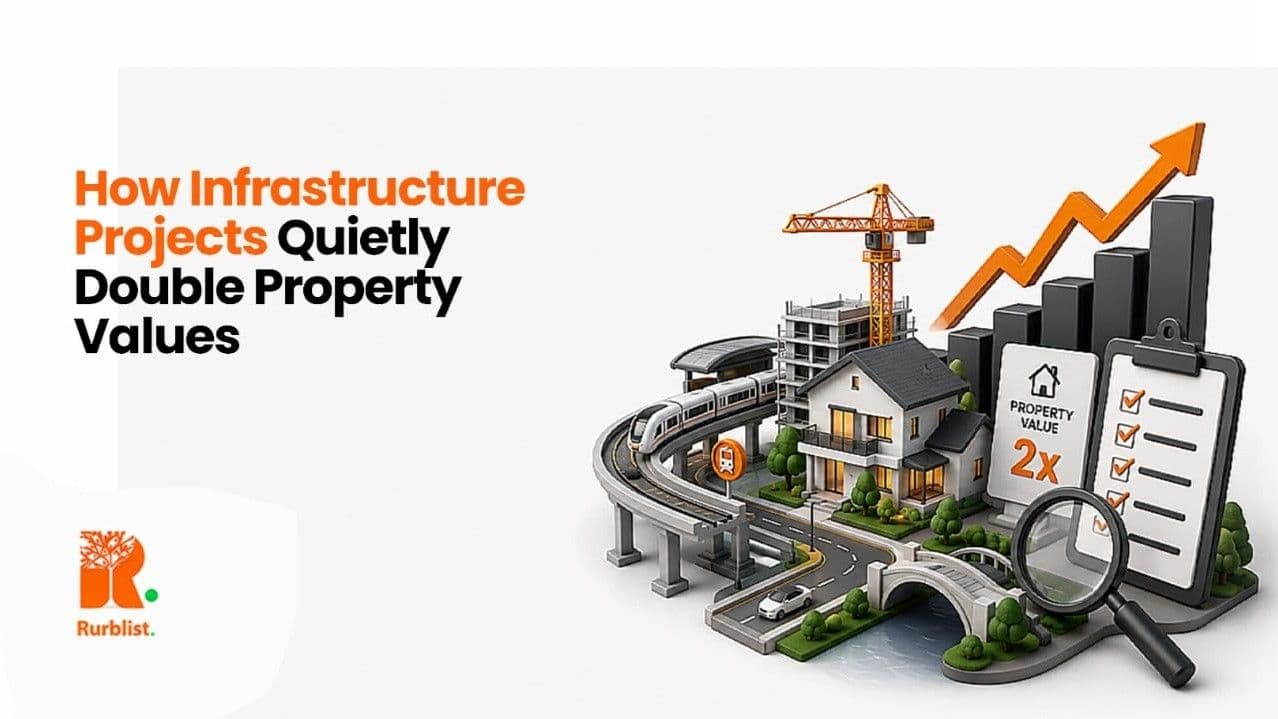
Sub-Saharan Africa requires an annual infrastructure investment of 7.1 percent of GDP to meet expanding urban demand, according to World Bank Infrastructure Division research, highlighting the massive capital gap that early private real estate investors can exploit.
Nobody sends out an announcement the day land values are about to shift. It happens quietly, usually years after a road, a rail line, or a bridge gets approved, and by the time most people notice, the early buyers have already made their money.
Why infrastructure moves property values more than almost anything else
Estate surveyors and valuers have identified major infrastructure projects, highways, rail corridors, airports, and industrial hubs, as powerful catalysts for property value appreciation and urban expansion, and now emphasize identifying these emerging growth corridors early rather than reacting once development is already visible. The mechanism is straightforward. Infrastructure reduces friction. Reduced friction increases demand. Increased demand raises prices. The only unpredictable part is timing, and getting that timing right is exactly where patient investors separate themselves from everyone else.
The scale of what’s currently being built.
The Federal Government has completed 40 major road and bridge projects across Nigeria between May 2023 and May 2026, while construction continues on approximately 5,400 kilometres of highways, expressways, and strategic road corridors nationwide, with about 1,800 kilometres already finished and 133 additional projects still under construction. The 2026 federal budget proposed ₦3.23 trillion for federal roads alone, a 489 percent increase on 2024 allocations, alongside ₦102.3 billion in counterpart funding for Phase One of the Lagos Green Line rail project. This is not a modest, incremental building program. It is one of the largest transport infrastructure pushes in the country’s recent history.
Where the pattern has already proven itself…
The Lagos Ibadan Standard Gauge Railway, completed in 2021, connects Lagos to Ibadan, improving cargo and passenger transport along that corridor. Urban rail initiatives like the Lagos Blue Line have demonstrated a similar effect closer to the city centre, with rapid transit access directly boosting surrounding land valuations, while residential homes near modern rail stations see significantly faster rental uptake and higher overall lease yields.
This same pattern is unfolding right now along the Lagos Calabar Coastal Highway, which has already boosted prices 25 to 40 percent in areas within five kilometres of the sections that have opened so far, with projected 2026 price growth of roughly 18 to 25 percent for the Lekki corridor and coastal highway adjacent areas, 15 to 20 percent for Katampe Extension and Jabi in Abuja, and 12 to 18 percent for premium Port Harcourt estates.
Where this heads next…
Industry analysts expect Nigeria’s expanding national railway roadmap to transform the country’s real estate landscape more broadly, with communities near new railway lines and stations likely to see rising property demand, urban development, and commercial activity, and investors already showing early interest in areas earmarked for new terminals and transit hubs. The pattern is consistent enough now that it barely qualifies as speculation anymore. It is closer to a formula.
This is not a reason to buy blindly.
Appreciation driven by infrastructure is real, but it is not guaranteed or risk free. Projects face delays, budgets shift, and timelines announced today can slip by years. The corridors generating the strongest growth are frequently the same corridors where documentation is least mature, since speculative interest tends to outpace how thoroughly land in a rapidly growing area has actually been verified.
Where Rurblist fits into this…
If you’re trying to figure out where property values are headed next, stop watching the listings and start watching the construction announcements, the transport ministry reports, the projects that sound boring on the surface. That is usually where the next decade of appreciation quietly begins. What Rurblist adds to that is the part infrastructure growth alone can’t guarantee, actual certainty about what you’re buying into. Every listing, whether it sits in an established neighbourhood or a corridor still being built out, goes through the same Node Lawyer verification and escrow protected transaction before it reaches you. The opportunity created by infrastructure is real. So is the risk of chasing it without someone independently confirming the title behind it holds up.
Infrastructure moves fast, but Rurblist protects you faster. Stay tuned to our frequent updates on Verified, High-Growth Properties in Nigeria.
Keep Reading
 Articles
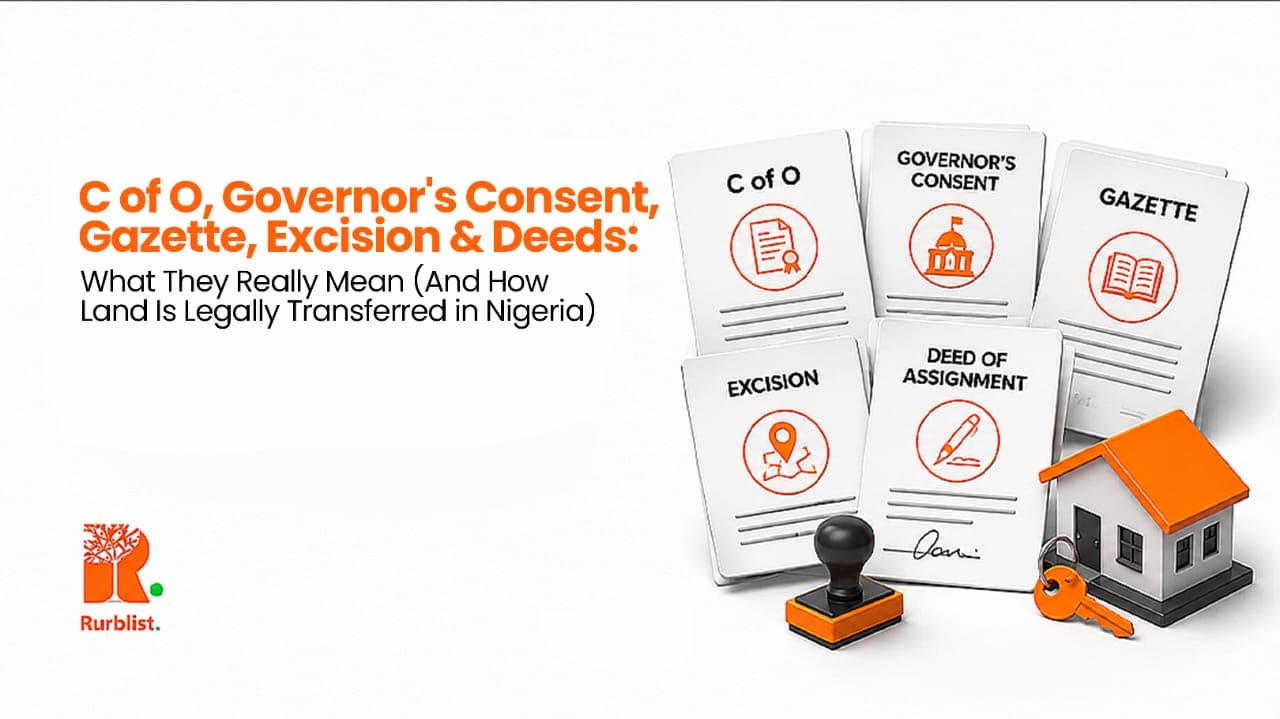
C of O, Governor's Consent, Gazette, Excision & Deeds: What They Really Mean (And How Land Is Legally Transferred in Nigeria)
Only 8.1% of Nigerian landlords hold a C of O, and nearly 60% of civil court cases are land-related. Understand the life cycle of land ownership, decipher key title documents, and learn why unbroken chain of title matters more than paper promises.
5 mins Read
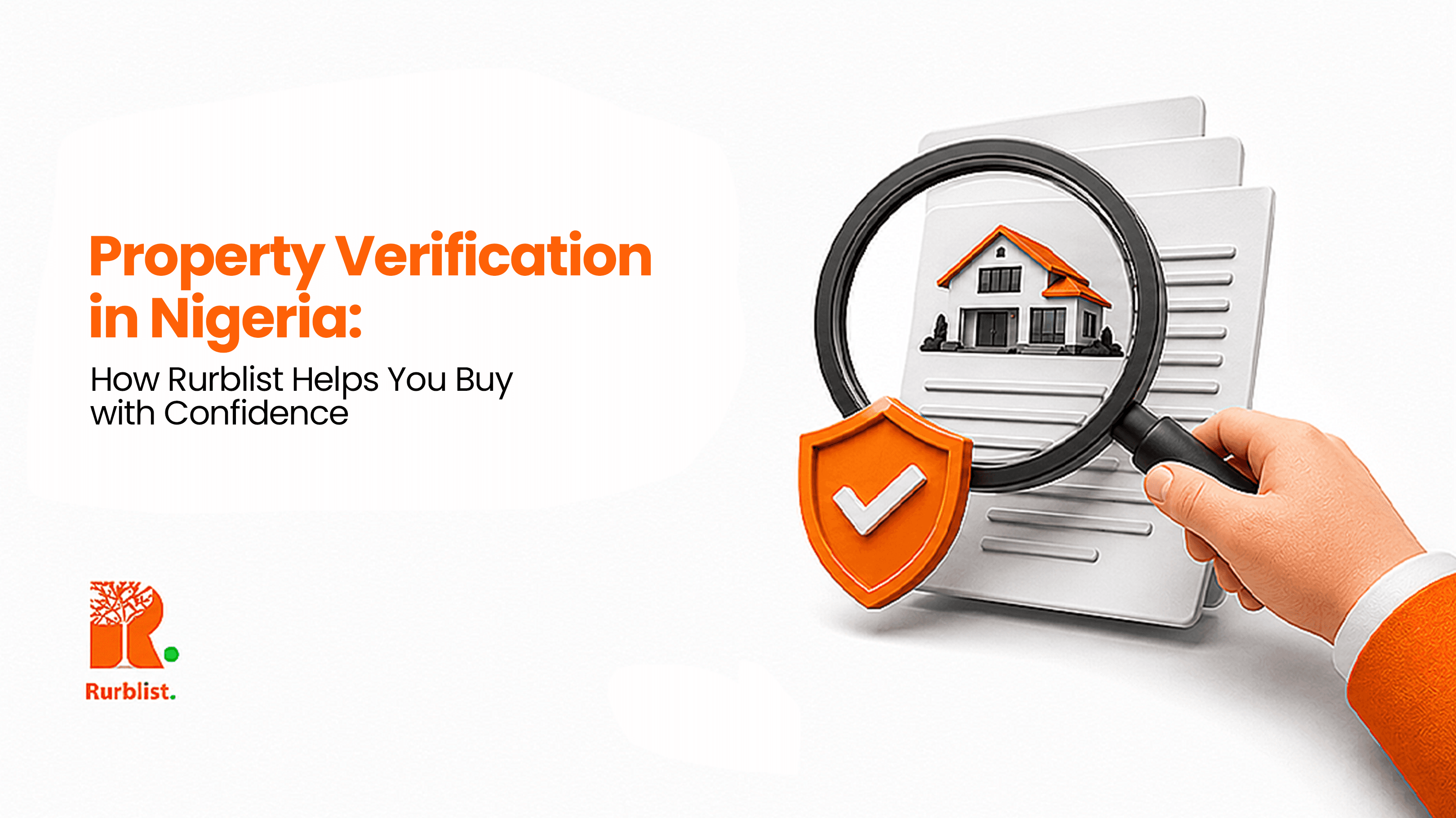
Property Verification in Nigeria: How Rurblist Helps Property Investors Buy With Confidence
Nigeria's property market has become one of the most consistently profitable spaces for fraudsters in the country, and the numbers back that up more clearly than the anecdotes do.
Get one Real Estate post every week
Verification insights and location guides, sent when we actually have something worth saying.